Responsible investment
The materiality analysis shows that responsible investing is a key sustainability issue. Bellevue comprehensively implements ESG criteria in its investment processes and portfolios, taking into account the growing regulatory requirements.
Various sustainability approaches have been embedded into our ESG framework, which we have systematically implemented and are continuously developing.
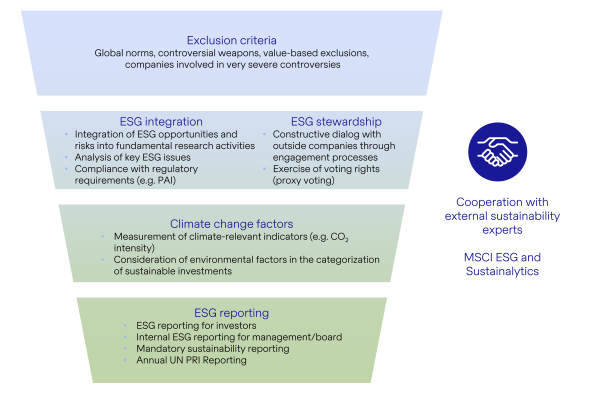
Bellevue’s ESG investment guidelines basically comprise the following elements:
Exclusion criteria based on norms and values
We are committed to adhering to internationally recognized norms and systematically exclude from the managed investment portfolios any companies that seriously violate human rights, the environment or labor norms, or are involved in corruption. To this end, we apply the MSCI ESG controversies methodology and standards. MSCI ESG Controversies is intended to reflect all areas of adverse impact covered by the Organisation for Economic Co-operation and Development’s (OECD) Guidelines for Multinational Enterprises on Responsible Business Conduct. In addition, MSCI ESG Research provides a mapping of ESG controversy cases to the underlying principles of the following global norms: the UN Global Compact (UNGC), the UN General Principles of Business and Human Rights (UNGP) and the International Labor Organization (ILO) Conventions (both core and broad).
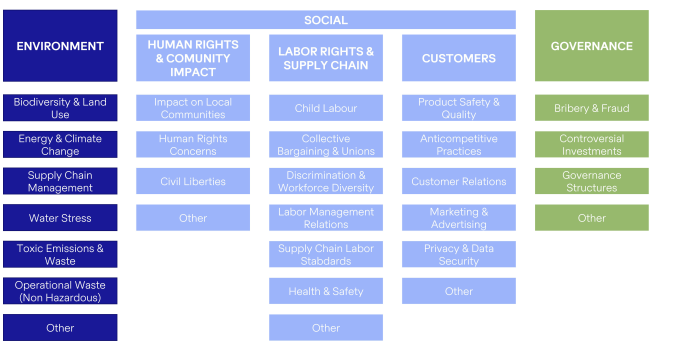
MSCI ESG Research has a dedicated team of analytical staff who identify and assess the severity of controversy cases that involve companies in its coverage universe on an ongoing basis. ESG analytical staff review the reported allegations and apply consistent scoring and a color-coded flag for each controversy case, based on the severity of impact in each case, the alleged role of the company in each case and the status of each case (which is determined by the state of resolutions, if any, between involved stakeholders). MSCI ESG Controversies – evaluation framework:
In contrast to exclusions based on violations of global principles and standards, value-based exclusions are based on social, ethical or moral values. Thresholds have been defined for the percentage of overall revenues that can be generated from business areas with high ESG risk scores such as thermal coal and tobacco production. Companies that exceed the generally accepted annual revenue thresholds in the business areas below are excluded:
Business area | Revenue threshold | |
Controversial weapons | 0% | |
Thermal coal | 5% | |
Fracking/oil sands | 5% | |
Production of tobacco | 5% | |
Sale of tobacco | 20% | |
Adult entertainment | 5% | |
Gambling | 5% | |
Palm oil | 5% |
Controversial business areas and the associated revenue thresholds were selectively adjusted during the reporting year in order to reflect current market standards and regulatory developments. This particularly affects the defence and armaments sector: following amendments to EU regulations and to the German BVI target market concept, the previous blanket 10% revenue exclusion for defence and armaments has been lifted. Investments in weapons prohibited under international law remain excluded. The adjustment allows for a more differentiated assessment of companies operating in the defence sector that may contribute to safeguarding fundamental security interests.
Compliance with all defined criteria continues to be systematically reviewed, even though our core investments are primarily in healthcare facilities. Our thresholds primarily serve the practical implementation of the exclusion criteria and are aligned with established market standards as well as the experience of institutional investors. Despite these adjustments, our commitment remains unchanged: to assess potential ESG risks responsibly and to approach controversial business activities with due care and sensitivity.
More far-reaching and/or stringent exclusion criteria may be applied for individual strategies with a dedicated sustainability focus.
Bellevue maintains an exclusion list, which is monitored and updated on a quarterly basis. Based on this list, just short 700 companies from across our investment universe were excluded from direct investment as at the end of 2025. Compliance with exclusion criteria is monitored monthly by an internal risk management unit.
ESG integration
Environmental, social and governance factors are integrated into the fundamental analysis of every company through an ESG integration process in which the associated financial risks or opportunities are evaluated with respect to future stock market performance. This approach gives our portfolio managers a holistic picture of an enterprise.
The environment subcategory focuses on aspects such as whether a company systematically measures and discloses its emissions or carbon intensity or such as monitoring the CO2 intensities of companies in the context of the average value for the relevant industry. The Social subcategory covers aspects such as product quality, data privacy policies, employee development and gender balance/diversity at management level. Examples of Governance issues are board independence, board compensation and corporate ethics.
To integrate sustainability criteria into the investment decision-making process, we use an ESG rating per issuer consisting of various sub-scores. These are based on data from MSCI ESG Research and Morningstar Sustainalytics, the relevance of which varies depending on the sector. The analysis focuses on the ESG key issues, i.e. the sustainability aspects in which a company performs particularly well or poorly.
However, ESG ratings should always be interpreted with caution and scrutinised critically. ESG rating methods are based on a predefined systematic approach that does not always result in an objective or «fair» assessment of risks. In fact, such methods often systematically disadvantage start-ups and small-cap companies relative to large-cap companies. A lack of manpower and experience in handling ESG issues can result in a company being underrated. Also, the given comparison group used to determine ESG ratings within a certain industry may not be entirely applicable. That is why our portfolio managers always take a closer look at potential or ostensible «ESG laggards» (CCC, B rating) and reach out to the ESG specialists at our external ESG research providers and at the companies with lagging ESG ratings. Investments in «ESG laggards» must be documented in detail. Bellevue Asset Management does not apply a «best-in-class» approach for the reasons mentioned above, unless otherwise dictated by a specific investment strategy.
A breakdown of Bellevue’s liquid investment strategies (net invested assets of Bellevue’s equity and fixed income strategies excluding cash, Private Equity, Ventures, company pension fund and dedicated derivative strategies) by MSCI ESG rating is given below:
Breakdown of MSCI ESG ratings as of December 31, 2025
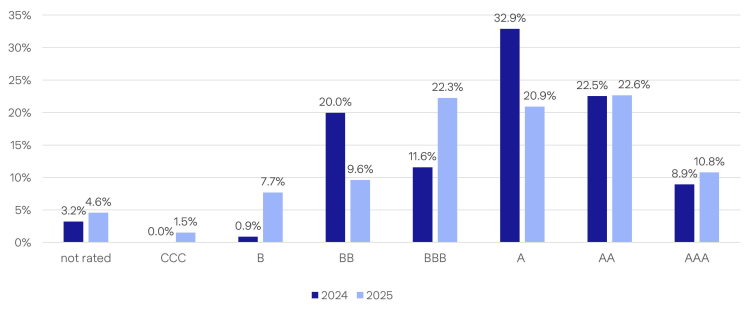
With 33.4% of net invested assets, the so-called ESG Leaders (MSCI ESG ratings of AA and AAA) were again slightly higher than in the previous year (31.4%). However, the share of so-called ESG Laggards (CCC and B) also increased from 0.9% to 9.2%. This was driven, on the one hand, by the build-up of new positions in small-cap, highly innovative pharma/biotech companies and, on the other hand, by changes to the MSCI ESG rating methodology (adjustments to the performance assessment of companies without commercial products in the context of regulatory warnings).
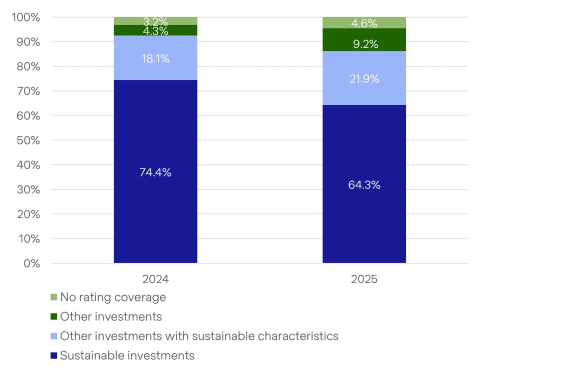
As a result, the mid-range of solid MSCI ESG ratings (A–BB) declined from 64% to around 53%. A total of 4.6% of net invested assets could not be rated (3.2% in the previous year). The MSCI ESG rating distribution shown above covers approximately 95% of Bellevue’s total assets under management (97% in the previous year).
Following the introduction of the EU Sustainable Finance Disclosure Regulation in March 2021 and the Delegated Regulation (EU) 2017/565 on MiFID II sustainability preferences (art. 2, para. 7–9), Bellevue established the two investment categories of «investments with sustainable characteristics» and «sustainable investments». In the absence of a uniform European-wide classification system, the two categories are applied in the investment processes of the respective strategies to the best of our knowledge based on current practices and the, in some cases limited, data available, in accordance with clearly defined principles.
Investments with sustainable characteristics (EU SFDR)
Most of Bellevue’s investment strategies take into account social, environmental as well as governance-related characteristics (ESG), in accordance with the provisions of Article 8 of the EU Disclosure Regulation 2019/2088 (EU SFDR), but do not have sustainability as their objective. In principle, the aim is to invest all of the assets of the relevant strategies in investments with sustainable characteristics. However, as there is not yet a sufficient amount of ESG data available in every asset class and sector and, given that some companies do not yet have an ESG rating, a minimum allocation threshold to investments with sustainable characteristics has been set as a percentage of total invested fund assets.
For strategies with a considerable allocation to small and mid-cap investments and/or significant emerging market exposure where ESG research coverage is low, the minimum allocation threshold to «investments with sustainable characteristics» is 50%. Strategies that are less affected by these factors must adhere to a higher minimum allocation of 75% to «investments with sustainable characteristics». Taking into account the new ESMA guidelines on the use of sustainability terms in fund names, this minimum proportion was raised from 75% to 80% for the Bellevue Sustainable Healthcare Fund.
Detailed information on the individual investment strategies as well as the methodology can be found in the product-specific documents available via the following link:
https://www.bellevue.ch/all-en/all/about-us/sustainability/responsible-investment
Sustainable investments (MiFID II and EU SFDR)
In addition to taking into account the most important adverse effects on sustainability factors (PAIs) at portfolio level, Bellevue has defined minimum allocations to sustainable investments for every investment strategy pursuant to Article 2 (17) of the Disclosure Regulation 2019/2088. This defines a «sustainable investment» as an investment in an economic activity that contributes to the achievement of an environmental and/or social objective and does not significant harm with respect to such objectives. Furthermore, the investee companies must follow good governance practices.
Investments are included under the «sustainable investment» allocation if, firstly, they have a positive alignment with at least on of the 17 UN Sustainable Development Goals and, secondly, if they meet the aforementioned sustainability characteristics and, thirdly, if they have no significant adverse impact on sustainability factors. The MSCI ESG methodology is also used to measure contributions towards the UN SDGs (see section on «Alignment with UN SDGs»). Minimum thresholds of 25% and 50% were defined for the sustainable investment category. Here as well, the existing ESG-related research coverage and the specific investment focus (e.g. small and mid caps) play an important role.
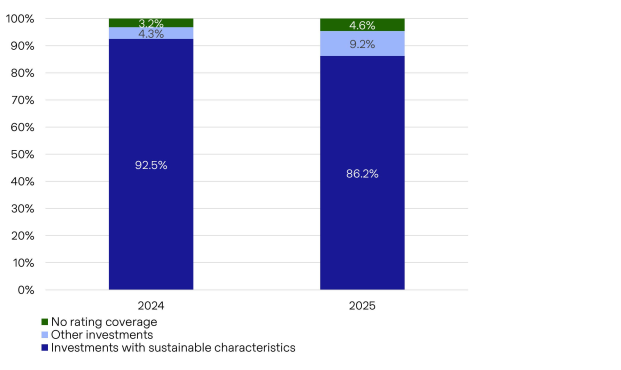
Based on the above definitions and the methodologies applied, approximately 86% (92% in the previous year) of the liquid net invested assets at Bellevue as of December 31, 2025, qualified as «investments with sustainable characteristics» and 64% (74% in the previous year) as «sustainable investments»:
Investment products with sustainable characteristics (based on EU SFDR)
Sustainable investment (based on EU SFDR)
A sector-wide comparison of these ratios within the meaning of the EU SFDR is still not possible due to a lack of harmonization of the applicable classification schemes and valuation methods.
Principal adverse impacts on sustainability factors (PAI)
Bellevue takes into account the principal adverse impact (PAI) of its investment decisions on sustainability factors in its investment processes and portfolio management activities. PAI indicators can be considered both explicitly and implicitly. In explicit consideration, thresholds are determined for each PAI criterion, defining when a specific PAI criterion has a «principal adverse impact» on a sustainability factor ( «supercritical»). If an issuer is assessed as having a «principal adverse impact», it cannot be categorized as a sustainable investment, no matter if the issuer makes a positive contribution to one of the UN’s 17 Sustainable Development Goals.
In implicit consideration, aspects of the relevant PAI indicators are incorporated into the ESG ratings methodology developed by MSCI ESG, resulting in indirect consideration of PAI performance by defining minimum rating scores that are used to calculate the share of sustainable investments or of investments with sustainable characteristics for each investment fund.
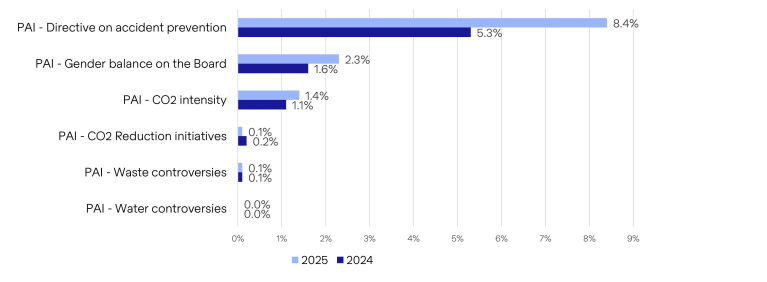
Within the framework of a PAI analysis, sustainability factors such as carbon intensity, programs to reduce carbon emissions, water- and waste-related controversies, or gender mix at board level, for example, are explicitly taken into account.
The consideration of adverse impacts on sustainability is subject to data availability. The required data is not always available in sufficient quantity and quality for every entity in which Bellevue invests. As a result, the list of PAI indicators taken into account is continuously reviewed based on data availability and data quality.
As at 31 December 2025, 12.4% of net invested assets had a supercritical PAI value (8.3% in the previous year), with 3.6% (2.8% in the previous year) attributable to originally sustainable investments, which were therefore downgraded to ‘unsustainable’ by this proportion. The investments with supercritical PAI values are distributed across the following categories:
Proportion of ‘supercritical’ PAI values by category
ESG stewardship
As a responsible long-term investor, Bellevue supports all measures and proposals designed to increase the value of portfolio companies over the long term in the interests of shareholders and investors. This includes engagement activities as well as the exercising of voting rights at general meetings of shareholders.
Engagement
This commitment to active investment management also highlights the importance of engagement as a key element of our ESG framework. Portfolio managers are engaged in an active and constructive dialog with the executives and other relevant representatives of portfolio companies on environmental, social and governance issues. If there are any indications of a significant controversy related to ESG issues, they are constructively discussed with the investee company and subsequent developments (e.g. change in strategy or processes, improvement of ESG rating) documented over time. Engagement activities are undertaken in the context of materiality and proportionality considerations. The level of engagement can vary depending (among other things) on the size of the position held by an investment strategy, the market capitalization of the investee company, and the entity’s stage of corporate development.
ESG engagement activities are recorded as part of the regular documentation for company meetings and have been systematically recorded in a proprietary tool.
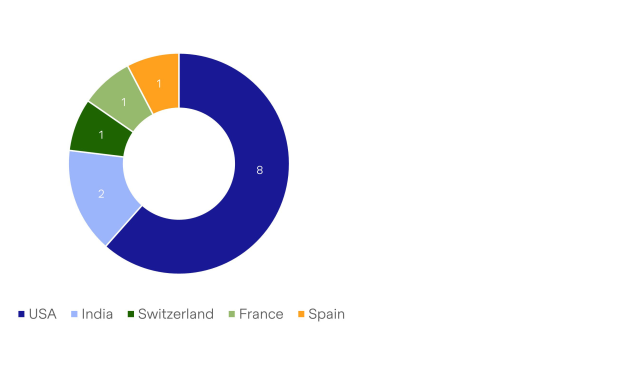
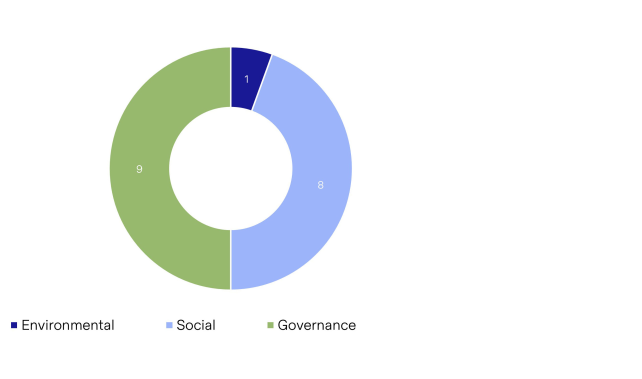
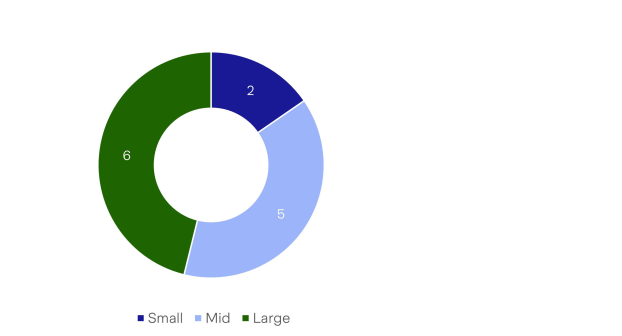
In 2025, our portfolio managers conducted a total of 13 engagements. Of these, four were concluded. In two cases, a partial success was achieved, while one engagement was considered fully successful from our perspective. Another engagement was terminated because the respective position was divested for fundamental reasons.
At the same time, our portfolio managers initiated five new engagements. The rationale behind these new engagements ranges from triggering initial ESG research coverage to addressing specific areas for improvement, such as product quality or data protection.
Breakdown of ESG engagements by country in 2025
Breakdown of ESG engagements by dimension in 2025
Breakdown of ESG engagements by company size 2025
Selected ESG engagement case studies illustrate that our portfolio managers and analysts maintain a close and ongoing dialogue with portfolio companies. The objective of this constructive exchange is to foster sustainably positive corporate development while specifically addressing material sustainability aspects. Qualified third-party assessments, such as those from independent proxy advisors, may be incorporated into the decision-making process. However, the final evaluation and decisions are always made exclusively in the interest of our investors.
Engagement Case (Example) – Sun Pharmaceuticals Industries Ltd. (India)
Sun Pharma is India’s largest pharmaceutical company, with a focus on generics, specialty pharmaceuticals and innovative medicines. The company serves more than 100 countries worldwide and is particularly strong in areas such as dermatology, oncology and ophthalmology, while increasingly expanding in innovative medicines, especially for the US market. The strategic shift towards higher-value, higher-margin innovative medicines makes the company both economically attractive and ESG-relevant, as growth, regulatory requirements and human capital are becoming increasingly decisive for long-term success.
The main focus of our engagement activity is Human Capital Management, particularly talent acquisition and the balance between internal and external recruitment of specialists. In ESG ratings, Sun Pharma is assessed comparatively weakly in the area of human capital. A key point of criticism relates to the strong emphasis on internal career paths and the historically limited integration of external specialists, especially at senior management level. An estimated 70–80% of top management positions have been filled through internal promotions. This topic was first addressed during our trip to India and further discussed in a call with the Head of Investor Relations on 17 December 2025.
Sun Pharma traditionally pursues a long-term human resources strategy, whereby employees are developed over many years within the company, receive continuous training and are gradually promoted into leadership roles. Management regards this philosophy as a key success factor for corporate culture, loyalty and operational stability. At the same time, the company confirmed that this approach is evolving as the business model becomes more complex and new business areas emerge. In particular, the expansion of the US business and the «Innovative Medicines» division has increased the need for highly specialized external experts.
A concrete example is the area of clinical research and regulatory expertise:
While two to three years ago Sun Pharma had only limited clinical development and FDA-related capabilities, these gaps have since been systematically addressed – predominantly through external hires (e.g. regulatory experts, clinical development specialists and FDA interaction professionals).
Current status and next steps:
- Internal talent development remains a core component of the HR strategy but is increasingly complemented by external recruitment for key positions.
- This development indicates gradual improvement in Human Capital Management, even if external ESG ratings have so far only partially reflected this progress.
- Continued dialogue with management and Investor Relations, as well as monitoring whether the described progress is reflected in improved ESG ratings, particularly in the area of Human Capital Development.
Proxy voting
Bellevue also protects the long-term interests of its investors by making active use of its voting rights at the general shareholder meetings of investee companies through proxy voting.
International Shareholder Services (ISS) provides us with proxy advisory services. ISS has many years of experience in proxy advisory and sets the bar with its voting policies. However, there is no obligation to vote in the same way as ISS recommends. Bellevue may vote against the recommendations of third-party organizations if it deems that their voting recommendations are not in the best interests of investors. Bellevue Asset Management AG actively exercises its voting rights as a rule.
Voting rights can be exercised in person by attending a general meeting; electronically via online voting platforms or through an appointed representative or representatives/proxy voting firms.
Overview of voting activities in 2025
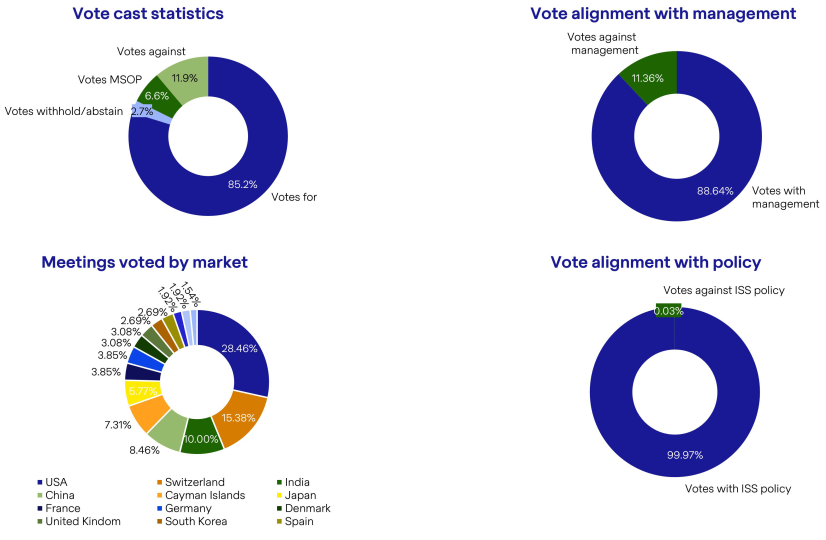
In 2025, our portfolio managers participated in 299 (previous year: 409) meetings eligible for voting and cast their votes on a total of 554 (previous year: 781) out of 567 (previous year: 804) possible resolutions, corresponding to a participation rate of 97.7% (previous year: 97.1%). This figure may be below 100% because certain markets require a share blocking period in connection with voting, which would in turn restrict the trading of the respective securities. In order to maintain portfolio liquidity, voting rights are not exercised in such cases.
Detailed information on our voting activity is given in the following tables:
Meeting overview
2025 | 2024 | |||||
Category | Number | Percentage | Number | Percentage | ||
Number of votable meetings | 308 | 419 | ||||
Number of meetings voted | 299 | 97.1% | 409 | 97.6% | ||
Number of meetings with at least 1 vote against, withhold or abstain | 167 | 54.2% | 221 | 52.7% | ||
Ballot overview
2025 | 2024 | |||||
Category | Number | Percentage | Number | Percentage | ||
Number of votable ballots | 567 | 804 | ||||
Number of ballots voted | 554 | 97.7% | 781 | 97.1% | ||
Proposal overview
2025 | 2024 | |||||
Category | Number | Percentage | Number | Percentage | ||
Number of votable items | 3 995 | 5 361 | ||||
Number of items voted | 3 828 | 95.8% | 5 221 | 97.4% | ||
Number of votes FOR | 3 263 | 85.2% | 4 552 | 87.2% | ||
Number of votes AGAINST | 457 | 11.9% | 589 | 11.3% | ||
Number of votes ABSTAIN | 82 | 2.1% | 33 | 0.6% | ||
Number of votes WITHHOLD | 24 | 0.6% | 48 | 0.9% | ||
Number of votes on MSOP | 252 | 6.6% | 376 | 7.2% | ||
Number of votes with policy | 3 827 | 100.0% | 5 207 | 99.7% | ||
Number of votes against policy | 1 | 0.0% | 25 | 0.5% | ||
Number of votes with management | 3 393 | 88.6% | 4 426 | 88.6% | ||
Number of votes against management | 435 | 11.4% | 606 | 11.6% | ||
Number of votes on shareholder proposals | 87 | 2.3% | 135 | 2.6% | ||
Climate-change factors – CO2 emissions at portfolio level
As of 31 December 2025, analyses of environmental and climate-related aspects at the portfolio level were conducted for the third consecutive year. The assessment covered exclusively our listed investment strategies, which account for approximately 98% of total assets under management.
Private equity investments (approx. 1%) as well as strategies predominantly using derivatives (also approx. 1%) have not yet been systematically analysed, either due to insufficient data availability or because the currently available methodological approaches have not yet reached the required level of maturity.
To provide better context for financed CO₂ emissions, the invested assets are presented below by asset class and sector, as well as by region.
AuM by sector
AuM by country
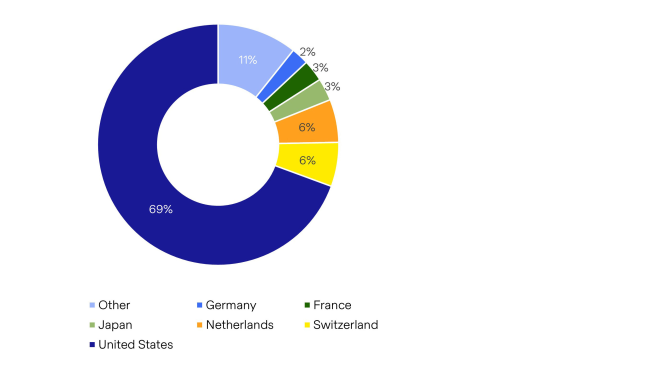
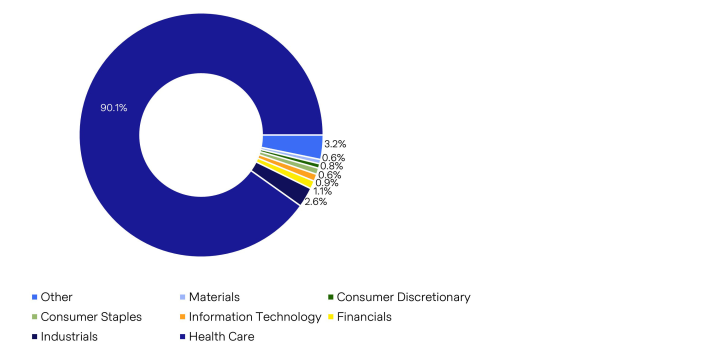
As a highly specialized provider of healthcare investments, approximately 90% (previous year: 92%) of our assets are invested in the healthcare sector. A further 6% (previous year: 5%) are allocated across the industrials, consumer, IT, communication and financials sectors, while only 1% (previous year: 1%) is attributable to the energy, materials and utilities sectors. Around 69% of assets under management are domiciled in the United States (previous year: 70%), 25% (previous year: 23%) are invested in European securities and 6% (previous year: 7%) are allocated to Asia and emerging markets.
Using the PCAF method (Partnership for Carbon Accounting Financials, methodology see box below), Scope 1, Scope 2 and (predominantly estimated) Scope 3 emissions were recorded for each portfolio position as of the reporting date, based on MSCI ESG data. The following overview shows the financed portfolio emissions as of 31 December 2025 based on Scope 1 and 2 as well as Scope 3 (absolute values measured in tonnes of CO₂), together with the respective data quality rating of the data used (Data Quality Score according to PCAF):
Financed GHG Emissions (t CO2e) | Scope 1 & 2 1) | Scope 3 2) | Data Coverage in % | PCAF Data Quality Score 3) Scope 1 & 2 | PCAF Data Quality Score 3) Scope 3 | |||||
BB Biotech AG | 5 914.61 | 42 898.05 | 86.08 | 3 | 3 | |||||
Bellevue AI Health | 23.94 | 823.43 | 96.50 | 1 | 3 | |||||
Bellevue Asia Pacific Healthcare | 725.12 | 5 676.21 | 99.80 | 2 | 3 | |||||
Bellevue Biotech (CH) | 51.23 | 856.89 | 91.55 | 2 | 3 | |||||
Bellevue Digital Health | 349.09 | 18 844.60 | 94.80 | 3 | 3 | |||||
Bellevue Diversified Healthcare | 24.54 | 784.05 | 97.90 | 2 | 3 | |||||
Bellevue Emerging Markets Healthcare | 887.44 | 2 248.06 | 97.50 | 2 | 3 | |||||
Bellevue Entrepreneur Europe Small | 17 219.78 | 72 776.10 | 93.90 | 2 | 2 | |||||
Bellevue Entrepreneur Swiss Small & Mid | 861.15 | 27 191.16 | 98.00 | 2 | 3 | |||||
Bellevue Entrepreneur Switzerland (CH) | 916.84 | 28 652.31 | 98.10 | 2 | 2 | |||||
Bellevue Global Income | 9 031.61 | 46 343.15 | 57.40 4) | 1 | 2 | |||||
Bellevue Global Macro | 12 639.36 | 67 192.95 | 45.60 4) | 1 | 2 | |||||
Bellevue Healthcare ETF | 28.11 | 972.03 | 99.40 | 1 | 3 | |||||
Bellevue Healthcare Strategy | 1 400.60 | 30 931.44 | 98.30 | 1 | 3 | |||||
Bellevue Healthcare Strategy (CH) | 262.46 | 5 775.55 | 98.10 | 1 | 3 | |||||
Bellevue Healthcare Trust | 434.77 | 13 121.39 | 96.40 | 2 | 3 | |||||
Bellevue Medtech & Services | 4 972.60 | 210 903.34 | 99.50 | 2 | 3 | |||||
Bellevue Medtech & Services (CH) | 245.17 | 11 224.55 | 100.00 | 2 | 3 | |||||
Bellevue Obesity Solutions | 86.52 | 2 965.09 | 97.20 | 1 | 3 | |||||
Bellevue Sustainable Healthcare | 211.88 | 6 340.83 | 99.00 | 1 | 3 | |||||
Bellevue Institutional Mandates | 7 172.12 | 39 043.63 | 96.30 | 1 | 2 | |||||
Rule Based Mandate/other | n/a | n/a | n/a | n/a | n/a | |||||
Private Equity | n/a | n/a | n/a | n/a | n/a | |||||
Total | 63 458.92 | 635 564.80 |
1) Aggregate GHG emissions financed for Scope 1 and 2 (on the basis of EVIC). Based on reported emissions data when available. Otherwise estimated. Units: t CO2e. Calculated using MSCI ESG data inputs and methodology.
2) Aggregate GHG emissions financed for Scope 3 (on the basis of EVIC). Based on reported emissions data when available. Otherwise estimated. Units: t CO2e. Calculated using MSCI ESG data inputs and methodology.
3) PCAF Data Quality Score: Standardized measure for determining the data quality of the financed emissions; score 1 = highest quality/certain (reported and verified emissions of issuer in line with the GHG protocol); score 5 = lowest quality/uncertain (calculated based on emissions factors for the sector per unit of revenue). Calculated using MSCI ESG data inputs and methodology.
4)The strategy also invests to a large extent in government bonds and derivatives, which cannot be covered by this methodology. This explains the comparatively lower data coverage ratios.
IMPORTANT NOTE: The given CO2 emissions must only be understood as abstract absolute amounts that will rise or fall as portfolio assets (AUM) increase or decline. Changes in portfolio assets, for example through subscriptions or redemptions of fund shares by investors, will have a significant impact on reported CO2 emissions. As such, this data is NOT suitable for comparative purposes, i.e., these figures cannot be used for historical or comparative contextual analysis, nor as KPI/target values.
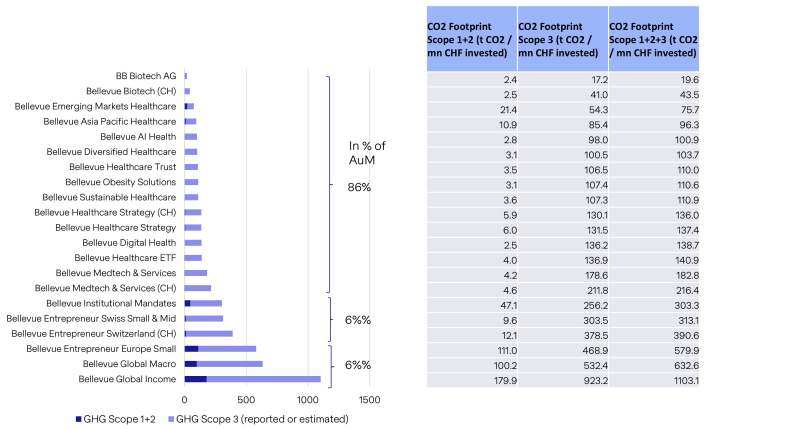
In contrast, the CO2 footprint, i.e. the ratio of financed emissions (GHG Scope 1 and 2 and GHG Scope 3) to total invested assets, is more meaningful:
Financed emissions – CO2 footprint (in t CO2/mn CHF invested)
In addition to the financed emissions, the asset-weighted sum of aggregate CO2 intensity, i.e. total portfolio carbon emissions in metric tons per USD 1 mn turnover (WACI Scope 1, 2, 3), has been calculated for each strategy:
CO2 intensity | WACI Scope 1, 2 1) | WACI Scope 3 1) | WACI Scope 1, 2 & 3 1) | Data Coverage in % | Est. EU Taxonomy Alignment 2) | |||||
BB Biotech AG | 30.86 | 283.34 | 314.20 | 86.10 | 0.0% | |||||
Bellevue AI Health | 11.31 | 364.56 | 375.88 | 96.50 | 1.0% | |||||
Bellevue Asia Pacific Healthcare | 39.37 | 291.07 | 330.44 | 99.80 | 0.0% | |||||
Bellevue Biotech (CH) | 24.34 | 249.13 | 273.47 | 91.60 | 0.0% | |||||
Bellevue Digital Health | 12.02 | 742.34 | 754.36 | 94.80 | 0.1% | |||||
Bellevue Diversified Healthcare | 13.44 | 351.94 | 365.38 | 97.90 | 0.1% | |||||
Bellevue Emerging Markets Healthcare | 89.39 | 246.45 | 335.83 | 97.50 | 0.0% | |||||
Bellevue Entrepreneur Europe Small | 162.33 | 578.43 | 740.76 | 93.90 | 9.4% | |||||
Bellevue Entrepreneur Swiss Small & Mid | 14.44 | 501.04 | 515.48 | 94.00 | 1.7% | |||||
Bellevue Entrepreneur Switzerland (CH) | 14.34 | 496.40 | 510.74 | 98.01 | 1.7% | |||||
Bellevue Global Income | 177.67 | 756.39 | 934.06 | 57.40 | 5.4% | |||||
Bellevue Global Macro | 99.58 | 469.50 | 569.08 | 45.60 | 3.9% | |||||
Bellevue Healthcare ETF | 11.62 | 359.94 | 371.57 | 99.40 | 0.1% | |||||
Bellevue Healthcare Strategy | 19.82 | 402.26 | 422.09 | 98.30 | 0.0% | |||||
Bellevue Healthcare Strategy (CH) | 19.17 | 402.23 | 421.40 | 98.10 | 0.0% | |||||
Bellevue Healthcare Trust | 13.01 | 304.57 | 317.58 | 96.40 | 0.1% | |||||
Bellevue Medtech & Services | 17.17 | 813.97 | 831.14 | 99.50 | 0.1% | |||||
Bellevue Medtech & Services (CH) | 14.14 | 659.40 | 673.54 | 100.00 | 0.1% | |||||
Bellevue Obesity Solutions | 13.81 | 378.99 | 392.79 | 97.20 | 0.1% | |||||
Bellevue Sustainable Healthcare | 14.43 | 337.59 | 352.03 | 99.00 | 0.1% | |||||
Bellevue Institutional Mandates | 65.10 | 430.22 | 495.31 | 96.30 | 2.7% | |||||
Rule Based Mandate | n/a | n/a | n/a | n/a | n/a | |||||
Private Equity | n/a | n/a | n/a | n/a | n/a | |||||
Asset weighted average | 33.80 | 458.70 | 492.40 |
1) GHG emissions in tons of CO2 per USD 1 mn turnover for Scope 1, 2 and 3 emissions. Based on reported emissions data, if available, otherwise estimated emissions; units: Calculated using MSCI ESG data inputs and methodology.
2) Estimated EU Taxonomy Alignment: Estimated maximum percent of weighted-average investee turnover that makes a substantial contribution to one or more of the EU Taxonomy’s climate or environmental objectives without having a significant adverse impact on the other objectives and that is also in compliance with minimum human and labor rights. Calculated using MSCI ESG data inputs and methodology.
The Bellevue Global Income Fund continues to be among the most carbon-intensive investment strategies within the Bellevue fund range, as it invests in the energy and mining sectors, which are among the industries with the highest CO₂ emissions. In contrast, the healthcare funds exhibit the lowest CO₂ intensities. These continue to include BB Biotech AG, the Bellevue Biotech (CH) Fund, the growth-oriented Bellevue Emerging Markets Healthcare and Asia Pacific Healthcare funds, as well as the broadly diversified Bellevue Sustainable Healthcare and Bellevue Healthcare Strategy funds. All diversified healthcare strategies are therefore in line with the MSCI World Healthcare Index, whose CO₂ intensity was calculated at 371.6 t CO₂ per USD million of revenue as of 31 December 2025.
By comparison, the Entrepreneur funds and the Bellevue Global Macro Fund naturally invest across broader sectors, including energy and industrials, and accordingly show higher average values than the healthcare strategies.
With 492.4 t CO₂ per USD million of revenue across all measurable Bellevue investment strategies (approximately 95% of total Bellevue AUM), the CO₂ intensity, or WACI (Scope 1, 2 and 3), is around 40% below that of the index-weighted constituents of the MSCI AC World Index (829.3 t CO₂ per USD million of revenue) and significantly below the previous year’s level (524.6 t CO₂ per USD million of revenue).
With regard to the alignment of Bellevue’s investment strategies with the climate and environmental objectives of the EU Taxonomy, Bellevue Entrepreneur Europe Small, at 9.3%, and Bellevue Global Income, at 5.4%, show moderate contributions to the European Commission’s environmental objectives. Across Bellevue’s total assets under management, the asset-weighted share of revenues contributing to at least one of the EU Taxonomy’s environmental or climate objectives remains stable at around 0.6%. This is primarily attributable to the fact that 90% of our investments are allocated to the healthcare sector, which by its nature cannot make significant contributions to the six environmental objectives of the EU Taxonomy (the asset-weighted revenues within our healthcare investments with EU Taxonomy alignment amount to 0.08%; of the approximately 260 healthcare companies invested in, only three generate revenues with a very limited connection to the EU Taxonomy’s environmental objectives).
Accordingly, there is currently no obligation for our investment strategies to invest a minimum share of assets in environmentally sustainable economic activities within the meaning of Article 3 of the EU Taxonomy Regulation (EU) 2020/852. The EU Taxonomy-aligned revenues presented are disclosed for information purposes only.
PCAF methodology (Partnership for Carbon Accounting Financials):
The financed emissions of a loan or an investment in a company are determined by multiplying the attribution factor by the emissions of the borrower or investee. Total funded emissions of a portfolio of listed equities and corporate bonds are calculated as follows:

The attribution factor represents the proportional share of a given company, i.e., the outstanding amount divided by EVIC for listed equity or the outstanding amount divided by total equity and debt for traded bonds to private companies:
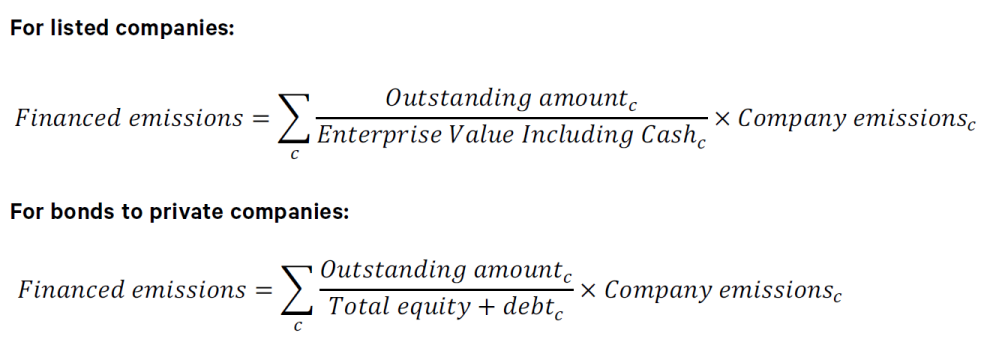
The financed emissions from listed equity and corporate bonds can be calculated in different ways depending on the availability of financial and emissions data specific to the borrower and investee: Overall, PCAF distinguishes three different options to calculate the financed emissions from listed equity and corporate bonds depending on the emissions data used: Option 1: Reported emissions (verified/unverified); Option 2: emissions are estimated based on data collected from the borrower or investee company; Option 3: emissions are estimated based on sector-specific average emissions per economic activity.
The definitions of the PCAF data quality scores for listed equities and corporate bonds are as follows:
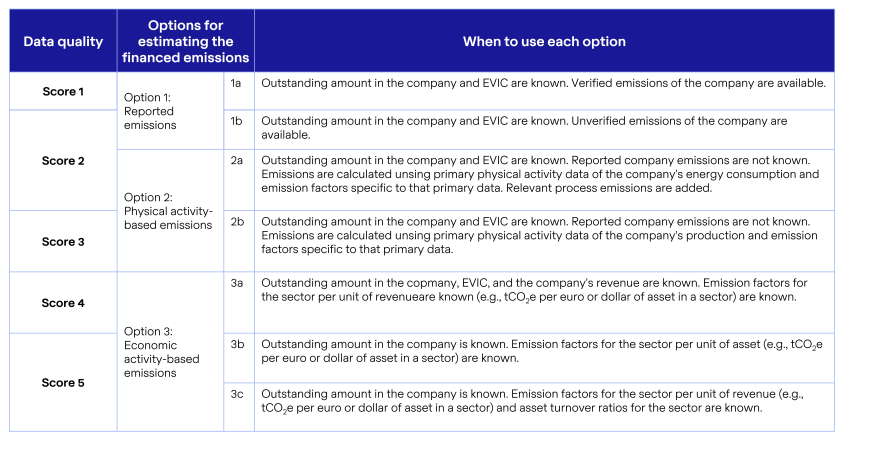
Source: Financed Emissions, The Global GHG Accounting & Reporting Standard, PCAF Partnership for Carbon Accounting Financials, December 2022
Climate-related goals and measures at the investment portfolio level
1) Bellevue Asset Management invests approximately 90% of its assets primarily in healthcare companies, thereby making a significant contribution to achieving social goals. The healthcare sector generally has significantly lower CO₂ emissions compared to other investment sectors. Nevertheless, we acknowledge our responsibility as an asset manager and contribute to global climate goals through the following measures: Limiting the absolute investment quota for issuers whose CO₂ intensity exceeds a critical PAI value (CO₂ intensity of more than 70 t CO₂ per million USD revenue AND higher than 50% of the relevant industry average) to a maximum of 50% of the assets of the respective investment strategy (for emerging markets and small-cap strategies, this limit is set at 75%).
2) Measuring the share of issuers that already have validated Science-Based Targets Initiative (SBTi) goals or have signed an intent to do so. The first measurement was conducted at the end of 2024 to establish a target range for future development. As of December 31, 2025, 5.5% of the managed assets had committed to an SBTi goal, while 24.1% of portfolio companies had already their SBTi targets, approved.
3) Conducting climate-related corporate engagements.
As mentioned under the ESG Integration/PAI Consideration section, CO₂ emissions are factored into sustainability assessments. This occurs in two ways: Implicitly, via the MSCI ESG rating, which is relevant for determining investment quotas with sustainable characteristics. Explicitly, by assessing the CO₂ intensity of each issuer. If an issuer’s CO₂ intensity exceeds 70 t CO₂ per million USD revenue (i.e., higher than the «low» value according to MSCI ESG methodology) and if this value is also 50% higher than the relevant industry average, then the issuer cannot be classified as a «sustainable investment», regardless of its contribution to any of the 17 UN SDGs.
Based on this methodology, a total of 25 (previous year: 22) issuers (equivalent to 1.4% of managed assets) were classified as not sustainable due to their CO₂ intensity as of the end of 2025.
Additionally, according to MSCI ESG Research, 6 issuers (representing 0.1% of managed assets) had no initiatives in place to reduce carbon emissions.
Greenhouse gas emissions and the CO₂ footprint are also integral components of a company’s MSCI ESG rating and are therefore implicitly factored into the assessment and weighting of sustainable investments.
Regarding investments in the carbon sector (oil, gas, coal), the investment share, measured against managed assets, stood at 0.24% at year-end (previous year: 0.31%).
KPIs of responsible investments
Target | 2025 | 2024 | ||||
ESG Coverage as % of AuM at year-end | >90% | 95.4% | 96.8% | |||
Investments with sustainable characteristics as % of AuM at year-end | >75% | 86.2% | 92.5% | |||
Sustainable investments as % of AuM at year-end | >25% | 64.3% | 74.4% | |||
Reduction in the sustainability rate due to supercritical PAI values | – | 3.5% | 2.8% | |||
ESG-Stewardship - Number of processed engagements in the calendar year | – | 13 | 22 | |||
ESG-Stewardship - Exercise of voting rights in % of the proposals eligible for voting | >90% | 97.7% | 97.1% | |||
Asset-weighted GHG intensity (WACI Scope 1, 2, 3) of total assets at the end of the year | – | 492.4 t CO2 | 524.6 t CO2 | |||
Investments in the carbon sector as % of AuM at year-end | – | 0.2% | 0.2% | |||
Investments with committed or approved SBTi targets in % of AuM | – | 29.5% | 32.0% |